
AI illusion: Market growth hides component shortages and unpredictability — Q&A with Dale Ford of ECIA
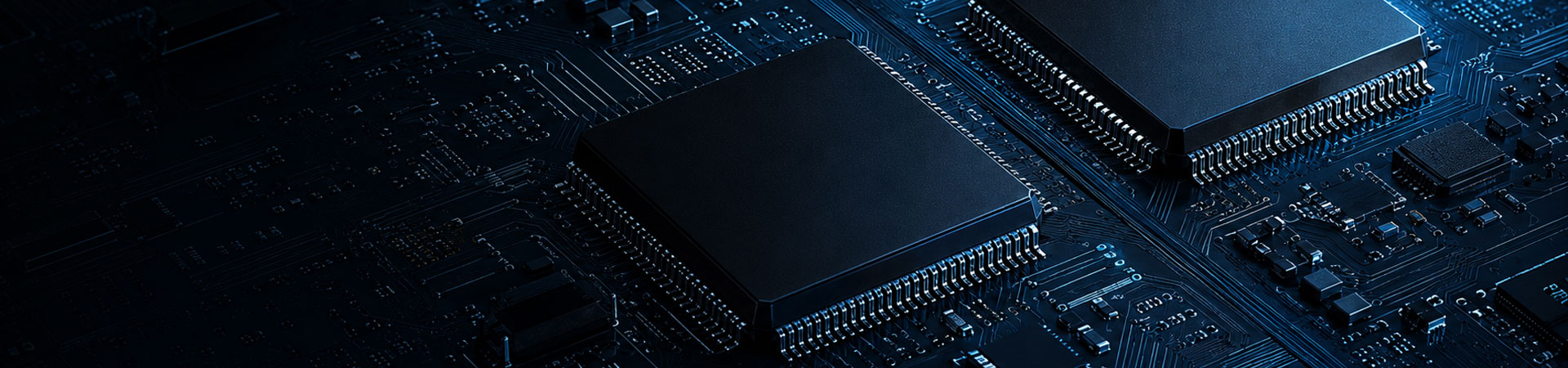
High-performance GPUs and AI accelerators are driving much of the semiconductor industry’s recent growth. But shortages and tariffs complicate the industry outlook. Source: Maksym Yemelyanov/Adobe Stock
For some, they might see top line growth in the chip manufacturing and electronics sector and assume that the industry is healthy.
But what became evident during a recent conversation with Dale Ford, chief analyst at the Electronic Components Industry Association, an industry trade group, is that it is an overly rosy perspective.
Ford notes that market growth is almost entirely one-dimensional, propped up by high demand and high prices for AI chips. On the flip side, many fabs have pivoted away from producing memory chips, creating shortages.
Ford Meanwhile, tariffs make trade and pricing unpredictable. This, in turn, creates opportunities for counterfeiters. And overall, growth in components outside of high-performance chips is struggling.
Ford is a highly respected industry analyst with extensive experience producing award winning market research. He brings 30-plus years of expertise in technology trends, competitive analysis, forecasting and supply-demand research of the electronics, semiconductor and electronics components industries.
That makes him the perfect individual to assess the current state of the industry. He shared those thoughts with us in a recent interview.
E360:
The industry sentiment index (a regular ECIA poll of its member manufacturers) has swung dramatically — lows in late 2023, recovery through 2024, tariff-driven front-loading in 2025. Where does the components market stand right now in the supply-demand cycle, and what does that mean for engineers making design decisions today?
Dale Ford:
The last update we published had the January results, and honestly, confidence is the strongest it's been in roughly five years. When I did surveys in October and November, the lack of forward-looking confidence was alarming — respondents would report solid current-month results but completely lose faith looking even one month ahead. That changed significantly in December. Seventy-one percent of Q4 survey respondents expected some type of growth in Q1 2026, with fewer than 1% projecting a decline. We're getting really positive, strong signals entering 2026.
Now, tariffs did cause a brief panic — confidence collapsed for a couple of months when they kicked in. But that settled out and we came back to more market-driven confidence. The sentiment we're seeing now spans semiconductors, passives and electromechanical components.
E360:
You mentioned this is an exceptionally strong semiconductor cycle. Can you unpack what's driving it?
Dale Ford:
We've seen 20 consecutive months of improving year-over-year growth — as strong as the previous cycle at this point, and the strongest since two decades ago. But here's the critical nuance: this is what I'm calling an ASP-driven cycle. It's not based on strong unit shipment growth. It's based on incredible increases in average selling prices.
You have to look at three distinct segments. Memory has seen record-setting volatility in growth rates. Logic ASSPs — your NVIDIAs of the world — have driven the upcycle alongside memory. And then everything else: discretes, analog, micros, opto, sensors. That third group has really struggled, bouncing around, unable to sustain growth.
Memory and logic ASSPs have seen roughly a three-times increase in ASPs compared to where we started this cycle. The other segments haven't seen that. So when you look at the overall semiconductor picture and see great growth numbers, understand that's concentrated.
The good news is those other segments are finally starting to recover — discrete went positive worldwide last quarter, analog went positive in the second half, and microcomponents went positive worldwide too.
For the major analog players — Infineon, ST, NXP, TI, Skyworks, Analog Devices, OnSemi — they've been raising ASPs even as inventories increase. That seems counterintuitive from a supply-demand standpoint. But their net profits were approaching zero. It's not a supply-demand story as much as a profitability imperative.
E360:
The CHIPS Act has driven some reshoring, but technologies like analog capacity remain concentrated in Asia. How long before U.S. reshoring initiatives really start to change where components are sourced domestically?
Dale Ford:
For everything except memory and logic ASSPs, I think engineers are largely okay today. The U.S. market for analog, general-purpose logic, discrete, sensors — it's actually quite small compared to global demand. Tariffs in those segments aren't really [at a] crisis point.
Where the concern is, is memory and advanced logic. And that's exactly where the major CHIPS Act investments are going. TSMC, GlobalFoundries, Samsung, Intel. VLSI Research data shows U.S. share of advanced foundry capacity was about 12% in 2023 and is projected to hit 17% by 2027. SIA and BCG project U.S. fab capacity will grow over 200% between 2022 and 2032, versus 108% globally. That's a dramatic reversal.
The bigger near-term problem isn't the reshoring timeline — it's tariff unpredictability. Distributors have told me: we've got a battleship here, you can't turn it on a dime. When Washington announces tariffs [that are] effective in two weeks, the supply chain simply can't adapt that fast. If we can get more policy stability, that alone will settle a lot of nerves.
E360:
A lot of fabs have retooled toward AI chips, with data center demand driving it. But we're also seeing supply challenges for conventional memories. How big of a concern is this?
Dale Ford:
This is my biggest area of personal concern entering 2026. HBM memory suppliers are sold out through 2026 — you're looking out into 2027 before they're taking new orders. That's pushed everything else aside as manufacturers retool to chase that lucrative high-end demand. DDR5, flash, conventional DRAM — all squeezed out.
Engineers need to get into active conversations with their memory suppliers right now and lock in commitments. Think about it as the golden screw problem — your entire production line could stop because you can't source a low-cost DRAM that you've always taken for granted.
Industrial, automotive, embedded applications that depend on legacy memory technologies are going to face a really tough situation.
E360:
Given the current supply chain stress, how would you rate counterfeit component risk versus years past?
Dale Ford:
What we've seen during crunches is the broker space exploding. I don't care how much brokers say they can inspect and screen — anything outside the authorized channel carries risk. And even if the percentage of counterfeit parts stays constant or declines slightly, the volume flowing through brokers is increasing. Higher volume through a non-secure channel means greater absolute risk. And the counterfeiters advance their technologies too, so detection gets harder over time.
ECIA's mission is to champion the authorized channel — distributors who source components directly from manufacturers, with end-to-end guarantees.
E360:
Edge AI and on-device inference are showing up across product categories. How is that shift changing component demand, and what component families do you expect to see a supply crunch on first?
Dale Ford:
Robotics is the most significant opportunity I see beyond data centers. And interestingly, I think automotive-adjacent companies are best positioned to lead there — not just Tesla, but all the Tier 1 and Tier 2 suppliers who provide complete systems and modules to the major OEMs. Some of them are now showing their robotics technology, and they bring real depth in safety-critical systems.
In any safety-critical or latency-sensitive application — robotics, automotive ADAS, life-critical medical devices — you cannot tolerate a round trip to the cloud. A robot can't wait for the network to tell it what to do next.
That forces on-device AI processing, which drives embedded processors, and everything that comes with them: actuators, sensors, all the analog components.
LG was literally showing their actuator family at CES this year — I'd never seen that before from them. That tells you where things are headed.
-
 SEMI Forecasts 69% Growth in Advanced Chipmaking Capacity Through 2028 Due to AIJul,09,2025
 -
 Executives Want More Resilient Supply ChainsMay,11,2026
 -
 AI illusion: Market growth hides component shortages and unpredictability — Q&A with Dale Ford of ECIAMar,30,2026
 -
 Despite Posting Growth, IC Market Faces Risk of SlowdownMay,20,2025